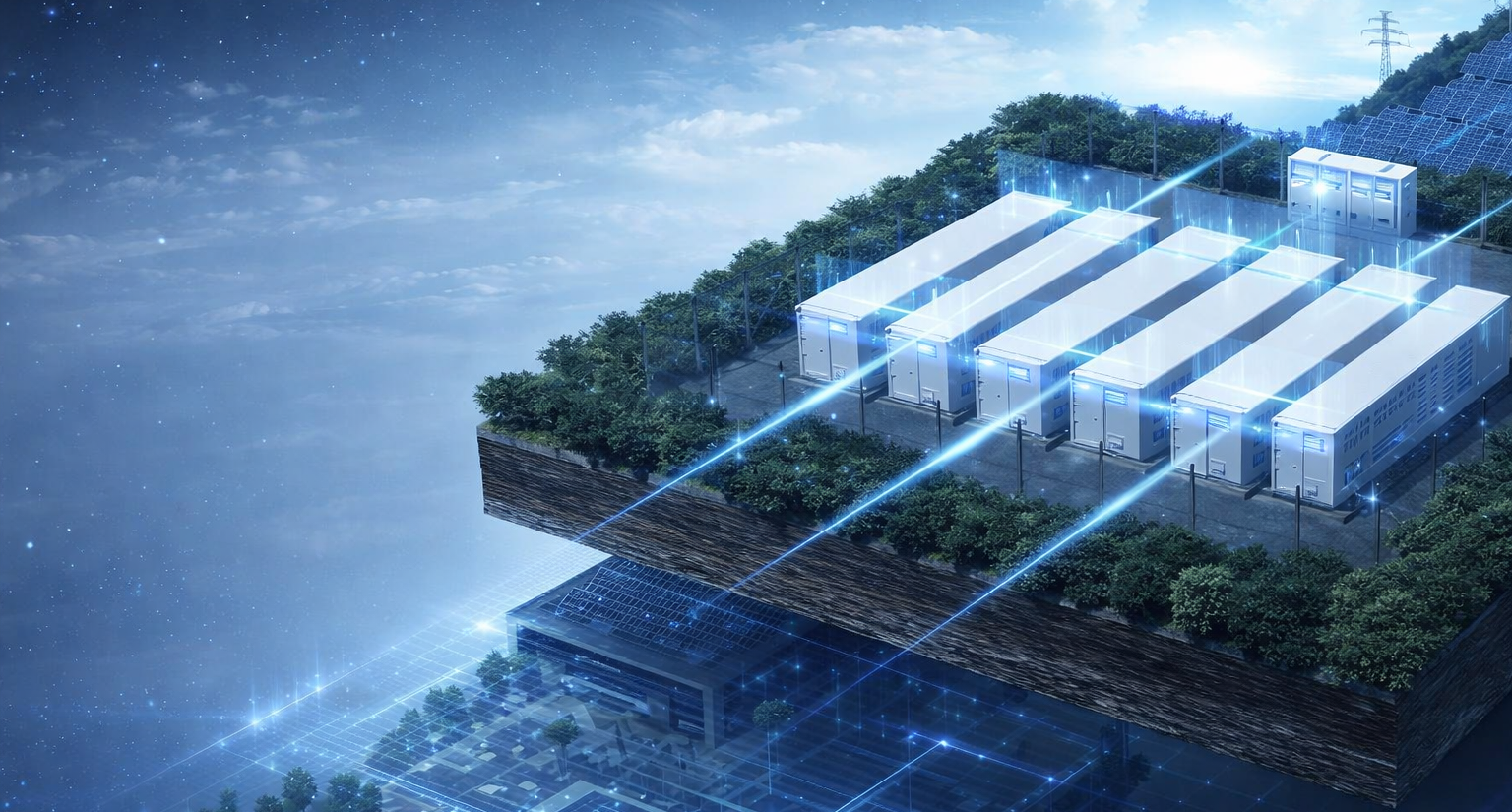
AI-driven design of a modular SST — from cell-level converter optimization to system-level integration and control.
Solid-state transformers replace bulky line-frequency transformers with compact, controllable power electronics — enabling bidirectional power flow, voltage regulation, and seamless integration of renewables, storage, and DC loads.
AC-DC rectification, isolated DC-DC conversion (DAB), and DC-AC inversion — each stage co-optimized by the AI Agent for the overall SST mission profile.
Cascaded H-bridge or modular multi-level cells with AI-driven device selection, magnetics sizing, and thermal balancing across all modules.
SiC-based designs for 1–10 kV class applications — the AI Agent handles insulation coordination, dv/dt management, and series device balancing.
Automated screening of DAB, LLC, and resonant CLLC cells — evaluating efficiency, power density, and fault tolerance trade-offs for the isolation stage.
Hierarchical control synthesis: cell-level soft-switching and current balancing, stage-level voltage regulation, and system-level power flow management.
Auto-generated test plans for each SST module — efficiency mapping, thermal cycling, and fault injection — feeding results back to refine the AI Agent's models.
