<?xml version="1.0" encoding="utf-8"?><feed xmlns="http://www.w3.org/2005/Atom" ><generator uri="https://jekyllrb.com/" version="3.10.0">Jekyll</generator><link href="https://fulongli.github.io/feed.xml" rel="self" type="application/atom+xml" /><link href="https://fulongli.github.io/" rel="alternate" type="text/html" /><updated>2026-10-29T22:12:11+00:00</updated><id>https://fulongli.github.io/feed.xml</id><title type="html">Fulong Li</title><subtitle>Dr. Fulong Li — Researcher and Engineer in Power Electronics, DC Microgrids, and Wide-Bandgap Devices.</subtitle><author><name>Dr. Fulong Li</name><email>fulong.li@ieee.org</email></author><entry><title type="html">Spirit Connect Group</title><link href="https://fulongli.github.io/posts/2025/06/spirit-connect/" rel="alternate" type="text/html" title="Spirit Connect Group" /><published>2025-06-09T00:00:00+01:00</published><updated>2025-06-09T00:00:00+01:00</updated><id>https://fulongli.github.io/posts/2025/06/SpiritConnect</id><content type="html" xml:base="https://fulongli.github.io/posts/2025/06/spirit-connect/"><![CDATA[<p>Keywords: Open Source, Power Electronics, Community, Collaboration.</p>

<h2 id="a-new-direction">A New Direction</h2>

<p>Today marks the beginning of <strong>Spirit Connect</strong> as more than a personal project —<br />
it is becoming a <strong>community for open-source power electronics</strong>, dedicated to sharing knowledge, tools, and best practices across the industry.</p>

<p>For years, power electronics has been limited by fragmented data, closed-door design processes, and inaccessible expertise.</p>

<p>Spirit Connect aims to change that.</p>

<hr />

<h2 id="what-spirit-connect-stands-for">What Spirit Connect Stands For</h2>

<ul>
  <li>
    <p><strong>Open Knowledge</strong><br />
Curating datasets, models, and design resources freely accessible to engineers, students, and enthusiasts.</p>
  </li>
  <li>
    <p><strong>Collaborative Learning</strong><br />
Bringing people together to discuss converter topologies, magnetics, WBG devices, and control methods.</p>
  </li>
  <li>
    <p><strong>Practical Tools</strong><br />
From simulation templates to component databases, our goal is to build a collective toolkit that accelerates innovation.</p>
  </li>
  <li>
    <p><strong>Bridging Academia &amp; Industry</strong><br />
Sharing insights, case studies, measurements, and real-world design notes to reduce the gap between theory and application.</p>
  </li>
</ul>

<hr />

<h2 id="our-vision">Our Vision</h2>

<p>To create the world’s most vibrant <strong>open-source power electronics ecosystem</strong> —<br />
a place where contributors from any background can learn, build, and innovate together.</p>

<p>We believe that by opening up data, models, and methods, the entire field can progress faster, become more transparent, and empower the next generation of power-electronics engineers.</p>

<hr />

<h2 id="how-you-can-join">How You Can Join</h2>

<ul>
  <li>Contribute datasheets, models, or code.</li>
  <li>Share your design notes, measurements, or insights.</li>
  <li>Participate in discussions, reviews, and collaborative R&amp;D.</li>
  <li>Help shape tools, libraries, or educational content.</li>
</ul>

<p>Spirit Connect is built on <strong>community, curiosity, and collaboration</strong>.<br />
Every idea and contribution helps strengthen the ecosystem.</p>

<hr />

<blockquote>
  <p><strong>Milestone Note:</strong><br />
This is not the launch of a company — it is the beginning of a community.<br />
A place to connect people, share knowledge, and collectively push the boundaries of modern power electronics.</p>
</blockquote>]]></content><author><name>Dr. Fulong Li</name><email>fulong.li@ieee.org</email></author><category term="open-source" /><category term="power electronics" /><category term="community" /><category term="knowledge-sharing" /><summary type="html"><![CDATA[Keywords: Open Source, Power Electronics, Community, Collaboration.]]></summary></entry><entry><title type="html">WiPDA2024, Cardiff, UK</title><link href="https://fulongli.github.io/posts/2024/09/wipda2024/" rel="alternate" type="text/html" title="WiPDA2024, Cardiff, UK" /><published>2024-09-16T00:00:00+01:00</published><updated>2024-09-16T00:00:00+01:00</updated><id>https://fulongli.github.io/posts/2024/09/wipda2024</id><content type="html" xml:base="https://fulongli.github.io/posts/2024/09/wipda2024/"><![CDATA[<h2 id="attending-in-cardiff">Attending in Cardiff</h2>

<p>I attended <strong>IEEE WiPDA-Europe 2024</strong>, the Workshop on Wide Bandgap Power Devices and Applications in Europe, in Cardiff. This time, I joined as an audience member: I did not submit a paper or give a presentation.</p>

<p>The workshop focused on power semiconductor devices and their applications. For me, it was an opportunity to step back from my own work, listen to what others were developing, and catch up on the direction of the technology through talks and conversations with fellow researchers and engineers.</p>

<h2 id="looking-back">Looking Back</h2>

<p>I remember the atmosphere as relaxed and informal. Without a presentation to prepare for, I could spend more time listening, asking questions, and exchanging ideas. It was a useful reminder that attending a conference can be worthwhile even without a publication: sometimes the value is simply in learning what is happening in the field and meeting the people behind the work.</p>]]></content><author><name>Dr. Fulong Li</name><email>fulong.li@ieee.org</email></author><category term="SiC" /><category term="GaN" /><category term="power electronics" /><category term="conferences" /><category term="research" /><summary type="html"><![CDATA[Attending WiPDA-Europe in Cardiff as an audience member, catching up on power semiconductor applications and exchanging ideas with fellow engineers.]]></summary></entry><entry><title type="html">PEAC 2022, Guangzhou, China</title><link href="https://fulongli.github.io/posts/2022/11/peac2022/" rel="alternate" type="text/html" title="PEAC 2022, Guangzhou, China" /><published>2022-11-04T00:00:00+00:00</published><updated>2022-11-04T00:00:00+00:00</updated><id>https://fulongli.github.io/posts/2022/11/peac2022</id><content type="html" xml:base="https://fulongli.github.io/posts/2022/11/peac2022/"><![CDATA[<h2 id="summary">Summary</h2>

<p>I joined <strong>IEEE PEAC 2022</strong>, associated with Guangzhou, China, online rather than travelling to the venue. We presented our review paper, <strong>“Review of DC Bus Signalling Control Methods in DC Microgrids”</strong>, through a virtual poster presentation.</p>

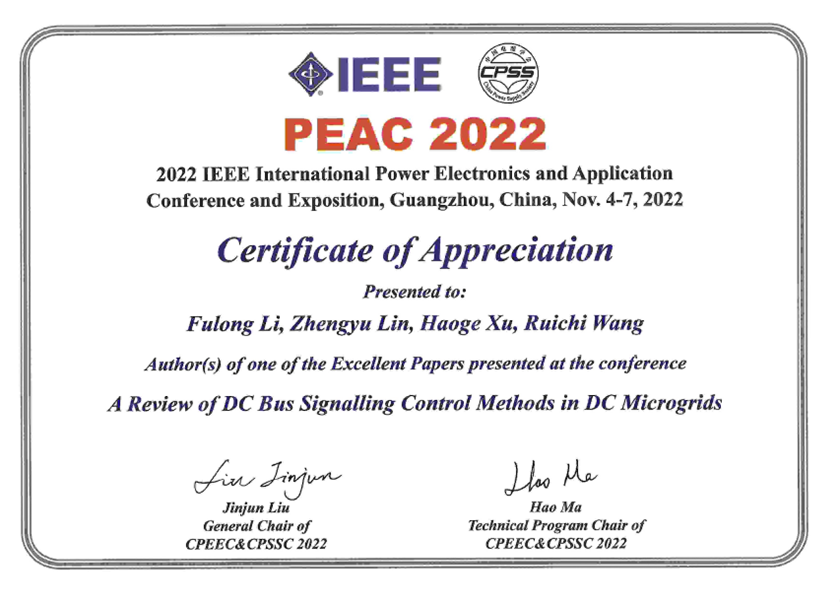
<p>I was very happy that our contribution received a <strong>Best Paper Award</strong>. Although I participated remotely, the recognition made this conference a particularly positive memory and a moment to celebrate the work with my co-authors.</p>

<hr />

<h2 id="poster-presentation">Poster Presentation</h2>

<p>You can view the embedded poster below:</p>

<iframe src="/files/PEAC2022_poster.pdf" width="100%" height="500" frameborder="0"></iframe>

<p><a href="/files/PEAC2022_poster.pdf">Download the PDF</a></p>

<hr />

<h2 id="best-paper-award">Best Paper Award</h2>

<p>A big thank you to the PEAC 2022 organising committee!<br />
We are honoured to have received the <strong>Best Paper Award</strong> for our contribution.</p>

<div style="text-align: center;">
  <img src="/images/timeline/PEAC2022_certificate.png" alt="Best Paper Award Certificate" style="width: 100%; max-width: 500px; border: 1px solid #ccc; border-radius: 8px;" />
</div>

<hr />

<h2 id="get-in-touch">Get in Touch</h2>

<p>If you’re interested in <strong>DC microgrid signalling methods</strong>, distributed control strategies, or potential research collaboration, feel free to <a href="mailto:fulong.li@ieee.org">reach out by email</a>.</p>]]></content><author><name>Dr. Fulong Li</name><email>fulong.li@ieee.org</email></author><category term="DC bus signalling" /><category term="power electronics" /><category term="conferences" /><category term="PEAC2022" /><summary type="html"><![CDATA[Joining PEAC 2022 online to present our DC microgrid signalling review, and celebrating a Best Paper Award with my co-authors.]]></summary></entry><entry><title type="html">IEEE PES General Meeting 2020, Montreal, Canada</title><link href="https://fulongli.github.io/posts/2020/08/pes2020/" rel="alternate" type="text/html" title="IEEE PES General Meeting 2020, Montreal, Canada" /><published>2020-08-06T00:00:00+01:00</published><updated>2020-08-06T00:00:00+01:00</updated><id>https://fulongli.github.io/posts/2020/08/pes2020</id><content type="html" xml:base="https://fulongli.github.io/posts/2020/08/pes2020/"><![CDATA[<h2 id="summary">Summary</h2>

<p>I participated online in the <strong>IEEE PES General Meeting 2020</strong>, which had originally been planned for Montreal, Canada. My contribution was:</p>

<blockquote>
  <p><strong>“Energy Management System for DC Microgrids Considering Battery Degradation”</strong></p>
</blockquote>

<p>The paper grew out of my visiting research at the <strong>University of Waterloo</strong>, working with <strong><a href="https://uwaterloo.ca/scholar/ccanizar/home">Prof. Claudio A. Cañizares</a></strong>. It examined energy management in DC microgrids with battery degradation taken into account, considering the longer-term consequences of how batteries are operated.</p>

<hr />

<h2 id="a-conference-during-the-pandemic">A Conference During the Pandemic</h2>

<p>Unfortunately, the COVID-19 pandemic meant that I could not travel to Montreal. Instead, I recorded a short video to present the work remotely. Recorded presentations became a familiar part of academic life during that period, allowing us to share results even when meeting in person was not possible.</p>

<p>Overall, I remember the experience positively, but I was disappointed to miss the chance to return to Canada and see Montreal. I still hope to visit the city in person one day.</p>

<hr />

<h2 id="recorded-presentation">Recorded Presentation</h2>

<p>You can view the presentation slides below:</p>

<iframe src="/files/PES2020_slides.pdf" width="100%" height="500" frameborder="0"></iframe>

<p><a href="/files/PES2020_slides.pdf">Download slides as PDF</a></p>

<hr />

<h2 id="related-publication">Related Publication</h2>

<p>View the paper on IEEE Xplore:</p>

<p><a href="https://ieeexplore.ieee.org/document/9281580">Energy Management System for DC Microgrids Considering Battery Degradation</a></p>

<hr />

<h2 id="get-in-touch">Get in Touch</h2>

<p>If you’re interested in EMS architecture, predictive battery modelling, or DC microgrid collaboration, feel free to <a href="mailto:fulong.li@ieee.org">reach out by email</a>.</p>]]></content><author><name>Dr. Fulong Li</name><email>fulong.li@ieee.org</email></author><category term="EMS" /><category term="battery degradation" /><category term="DC microgrids" /><category term="conferences" /><summary type="html"><![CDATA[Presenting research from my Waterloo visit through a recorded video during the pandemic, while hoping to visit Montreal in person another time.]]></summary></entry><entry><title type="html">ISIE 2020, Delft, The Netherlands</title><link href="https://fulongli.github.io/posts/2020/06/isie2020/" rel="alternate" type="text/html" title="ISIE 2020, Delft, The Netherlands" /><published>2020-06-17T00:00:00+01:00</published><updated>2020-06-17T00:00:00+01:00</updated><id>https://fulongli.github.io/posts/2020/06/isie2020</id><content type="html" xml:base="https://fulongli.github.io/posts/2020/06/isie2020/"><![CDATA[<h2 id="taking-part-online">Taking Part Online</h2>

<p>I attended <strong>IEEE ISIE 2020</strong>, the International Symposium on Industrial Electronics associated with Delft, the Netherlands, online because of the COVID-19 pandemic. I shared a virtual poster on our work:</p>

<blockquote>
  <p><strong>Multifunctional Control Design for Modular Plug-and-play Battery Storage in DC Microgrids</strong></p>
</blockquote>

<p>This work explored scalable, modular control solutions for battery storage in DC systems.</p>

<h2 id="looking-forward-to-returning">Looking Forward to Returning</h2>

<p>It was disappointing not to be there in person, although Delft was already familiar to me from several earlier visits. Preparing and sharing the poster online still gave me something to take away from the conference, but it felt different from travelling, meeting colleagues, and talking face to face.</p>

<p>At the time, I hoped that once the pandemic was over and travel returned to normal, there would be another opportunity to attend a conference there in person. That anticipation is part of how I remember this event.</p>

<hr />

<h2 id="poster-presentation">Poster Presentation</h2>

<p>The poster is embedded below:</p>

<iframe src="/files/ISIE2020_poster.pdf" width="100%" height="500" frameborder="0"></iframe>

<p>You can also <a href="/files/ISIE2020_poster.pdf">download the PDF here</a>.</p>

<hr />

<h2 id="contact">Contact</h2>

<p>If you’re interested in scalable battery control strategies for DC microgrids, feel free to <a href="mailto:fulong.li@ieee.org">email me</a>.</p>]]></content><author><name>Dr. Fulong Li</name><email>fulong.li@ieee.org</email></author><category term="DC microgrids" /><category term="battery storage" /><category term="conferences" /><category term="ISIE2020" /><summary type="html"><![CDATA[Sharing a virtual poster at ISIE 2020 during the pandemic, with memories of earlier Delft visits and hopes for meeting there again.]]></summary></entry><entry><title type="html">Research at Loughborough University — Hierarchical Control for DC Microgrids</title><link href="https://fulongli.github.io/posts/2019/10/blog-post-10/" rel="alternate" type="text/html" title="Research at Loughborough University — Hierarchical Control for DC Microgrids" /><published>2019-10-04T00:00:00+01:00</published><updated>2019-10-04T00:00:00+01:00</updated><id>https://fulongli.github.io/posts/2019/10/LU2019</id><content type="html" xml:base="https://fulongli.github.io/posts/2019/10/blog-post-10/"><![CDATA[<p>Keywords: Research Associate, Loughborough University, DC microgrid, Hierarchical Control, EPSRC.</p>

<p>After completing my <strong>PhD</strong>, I joined <strong>Loughborough University</strong> as a <strong>Research Associate</strong>, continuing my research on <strong>DC microgrids</strong> under an <strong>EPSRC</strong>-funded project. The work here builds directly on my doctoral research, with a stronger focus on <strong>control strategies</strong> for low-voltage DC microgrid systems.</p>

<h2 id="hierarchical-control-strategy">Hierarchical Control Strategy</h2>

<p>The core of my research at Loughborough revolves around a <strong>hierarchical control framework</strong> for DC microgrids, which is structured into three layers:</p>

<ul>
  <li><strong>Layer 1 — Converter-Level Control:</strong> The lowest layer deals with the direct control of individual power converters, ensuring stable voltage and current regulation at the device level.</li>
  <li><strong>Layer 2 — Multi-Converter Coordination:</strong> The middle layer addresses the coordination and control of multiple converters operating in cascade or in parallel, managing their interactions and ensuring seamless cooperation.</li>
  <li><strong>Layer 3 — System-Level Power Flow Management:</strong> The highest layer focuses on power flow control and optimisation across the entire microgrid, balancing generation modules and loads to achieve efficient and reliable operation.</li>
</ul>

<h2 id="building-a-low-voltage-dc-microgrid-testbed">Building a Low-Voltage DC Microgrid Testbed</h2>

<p>A significant part of my work at Loughborough involves <strong>designing and building a low-voltage DC microgrid experimental platform</strong>. This testbed serves as a physical environment for validating the proposed hierarchical control strategies and exploring practical challenges that arise in real hardware.</p>

<h2 id="about-loughborough">About Loughborough</h2>

<p>Loughborough is located in the <strong>heart of England</strong>. It is a small, friendly town with a close-knit community — a great place to focus on research. I am grateful for the opportunity to work on this EPSRC project and look forward to what the coming years will bring.</p>

<p>Wish me luck!</p>]]></content><author><name>Dr. Fulong Li</name><email>fulong.li@ieee.org</email></author><category term="Research Associate" /><category term="Loughborough University" /><category term="DC microgrid" /><category term="Hierarchical Control" /><category term="EPSRC" /><summary type="html"><![CDATA[Keywords: Research Associate, Loughborough University, DC microgrid, Hierarchical Control, EPSRC.]]></summary></entry><entry><title type="html">I successfully defended my PhD thesis</title><link href="https://fulongli.github.io/posts/2019/08/blog-post-9/" rel="alternate" type="text/html" title="I successfully defended my PhD thesis" /><published>2019-08-17T00:00:00+01:00</published><updated>2019-08-17T00:00:00+01:00</updated><id>https://fulongli.github.io/posts/2019/08/PhD2019</id><content type="html" xml:base="https://fulongli.github.io/posts/2019/08/blog-post-9/"><![CDATA[<p>Keywords: PhD, Aston University, DC microgrid, thesis defense.</p>

<p>On <strong>17 August 2019</strong>, I successfully defended my PhD thesis. I am very happy and grateful—this is one of the great milestones of my life.</p>

<h2 id="thank-you">Thank you</h2>

<p>I would like to thank everyone who was part of my PhD journey. My thanks go to colleagues and friends from <strong>Canada</strong>, <strong>China</strong>, the <strong>UK</strong>, and <strong>Aston University</strong>—and above all, to <strong>my supervisor</strong>, who supported and encouraged me throughout the entire process. I am truly grateful for everybody who appeared in my life during this time.</p>

<h2 id="my-phd-topic">My PhD topic</h2>

<p>My thesis focused on <strong>DC control strategies for DC microgrids</strong>. I believe this topic is very useful for future power distribution networks, and I hope it will become a growing trend— attracting more attention and support for research in this area. I hope my work will be useful to both industry and academia.</p>

<p>📄 <a href="https://publications.aston.ac.uk/id/eprint/46135/">View my PhD thesis</a> — <em>Control Strategies for Low Voltage DC Microgrids</em>, Aston University, UK.</p>]]></content><author><name>Dr. Fulong Li</name><email>fulong.li@ieee.org</email></author><category term="PhD" /><category term="Thesis defense" /><category term="DC microgrid" /><category term="Aston University" /><summary type="html"><![CDATA[Keywords: PhD, Aston University, DC microgrid, thesis defense.]]></summary></entry><entry><title type="html">ISIE 2019, Vancouver, Canada</title><link href="https://fulongli.github.io/posts/2019/06/isie2019/" rel="alternate" type="text/html" title="ISIE 2019, Vancouver, Canada" /><published>2019-06-12T00:00:00+01:00</published><updated>2019-06-12T00:00:00+01:00</updated><id>https://fulongli.github.io/posts/2019/06/ISIE2019</id><content type="html" xml:base="https://fulongli.github.io/posts/2019/06/isie2019/"><![CDATA[<h2 id="summary">Summary</h2>

<p>Attending <strong>IEEE ISIE 2019</strong>, the International Symposium on Industrial Electronics, in Vancouver was one of the happiest moments of my 2019. The conference brought together a rewarding presentation experience, the chance to meet someone I had long admired, and friendships that continued beyond the meeting rooms.</p>

<hr />

<h2 id="presentation">Presentation</h2>

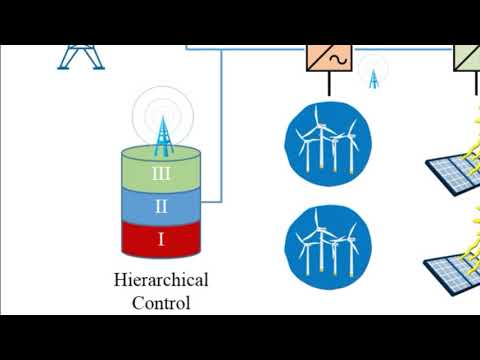
<p>I prepared a <strong>three-minute video</strong> to explain the main ideas of my research and was delighted to receive an award for the presentation. Making a short video was a different challenge from writing a paper: I had to decide what mattered most and communicate it clearly in very little time.</p>

<p>Watch the video here:</p>

<p><a href="https://www.youtube.com/watch?v=klparlT9_Dk&amp;list=LL&amp;index=117&amp;t=43s&amp;ab_channel=IEEEIndustrialElectronicsSociety"><img src="https://img.youtube.com/vi/klparlT9_Dk/0.jpg" alt="YouTube Video" /></a></p>

<blockquote>
  <p>Or <a href="https://www.youtube.com/watch?v=klparlT9_Dk&amp;list=LL&amp;index=117&amp;t=43s&amp;ab_channel=IEEEIndustrialElectronicsSociety">click this link to open in YouTube</a></p>
</blockquote>

<hr />

<h2 id="awarded-moment">Awarded Moment</h2>

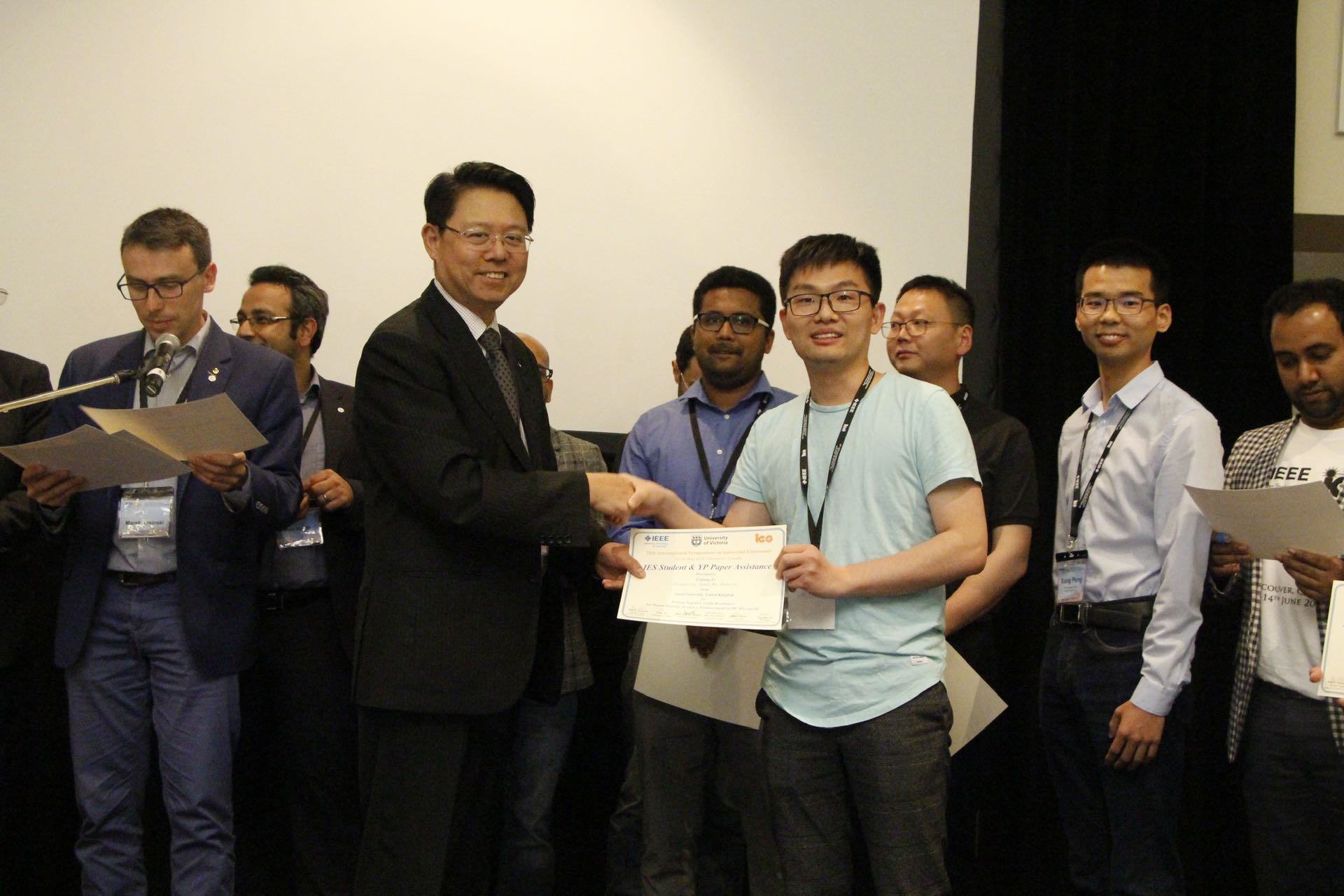
<p>Receiving the award was a very happy moment, and this photograph brings back that feeling.</p>

<div style="text-align: center;">
  <img src="/images/timeline/ISIE2019_awardedmoment.jpg" alt="Receiving an award at ISIE 2019" style="width: 100%; max-width: 500px; border: 1px solid #ccc; border-radius: 8px;" />
</div>

<hr />

<h2 id="meeting-robert-erickson">Meeting Robert Erickson</h2>

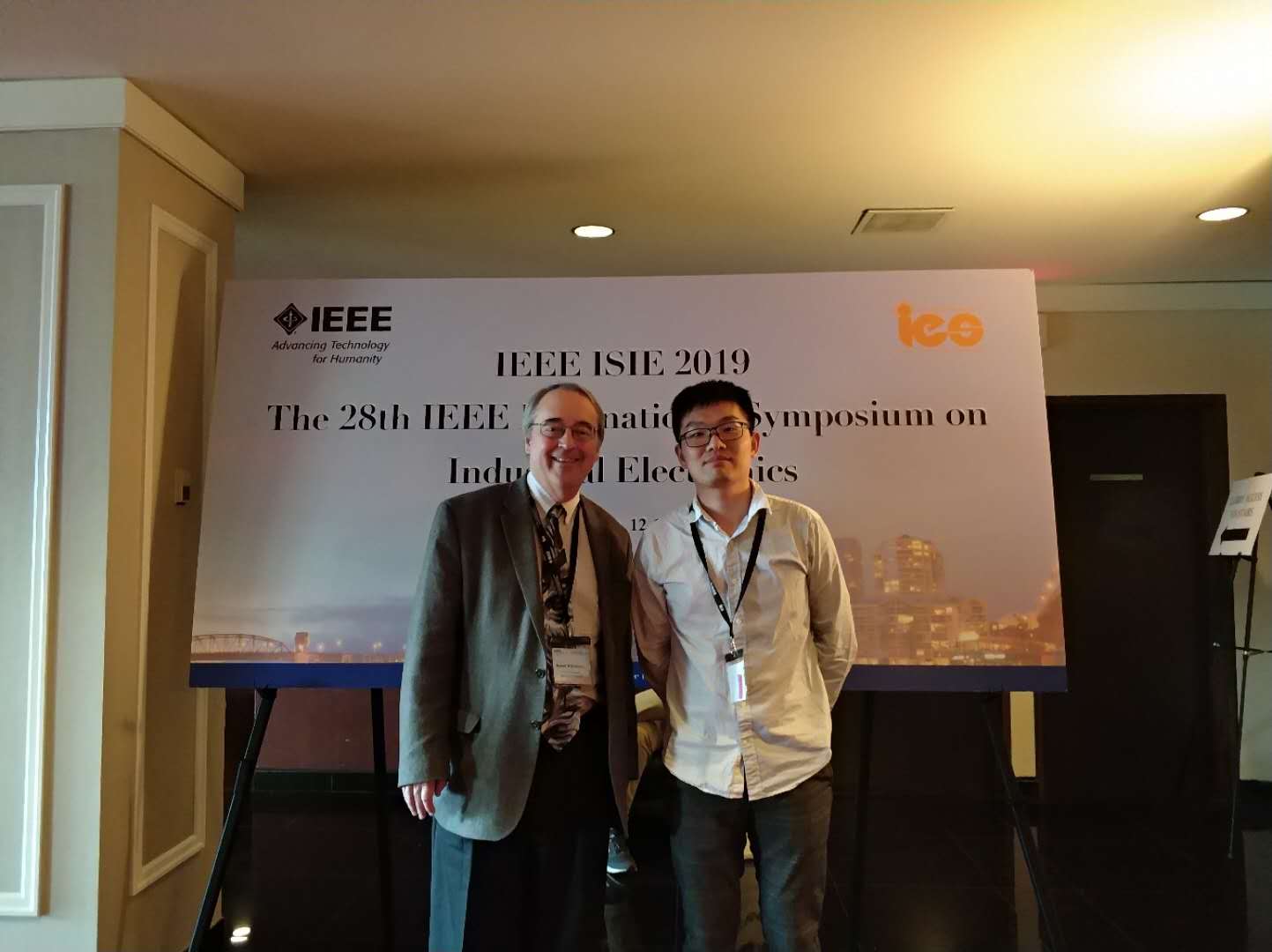
<p>Another highlight was meeting <strong>Professor Robert Erickson</strong>, co-author of <em>Fundamentals of Power Electronics</em>. He was someone I had long admired, so hearing him speak and having a photograph taken together meant a great deal to me.</p>

<p>We joined an <strong>IEEE Young Professionals session</strong>, listened to his talk, and exchanged ideas about developments in power electronics. It was a pleasure to meet him in that setting and to spend time with other researchers sharing their work and experiences.</p>

<div style="text-align: center;">
  <img src="/images/timeline/ISIE2019_2.jpg" alt="With Professor Robert Erickson at ISIE 2019" style="width: 100%; max-width: 500px; border: 1px solid #ccc; border-radius: 8px;" />
</div>

<hr />

<h2 id="exploring-vancouver">Exploring Vancouver</h2>

<p>I made several good friends at the conference, and we explored Vancouver together afterwards. One memory that stayed with me was the contrast around the old Chinatown: nearby, I saw people struggling with addiction and visible drug use on the street. It was a difficult scene to encounter and left a deep impression on me alongside the other sides of the city we visited.</p>

<p>Elsewhere downtown, I stayed at what was then the <strong>Trump International Hotel</strong>. It was probably the most expensive hotel I had stayed in up to that point, and I remember the comfort and the sense of luxury very clearly.</p>

<p>With some of the friends I had met, I also took a short road trip to see well-known places around Vancouver. Seeing enormous redwood trees for the first time was a particular highlight; their scale was unlike anything I had experienced before.</p>

<h2 id="a-taste-of-home-in-richmond">A Taste of Home in Richmond</h2>

<p>Richmond’s large Chinese community was another memorable part of the trip. There, I ate <strong>Huaiyang cuisine</strong>, something I had not encountered in all my years overseas. Finding that particular style of food so far from home was an unexpected pleasure.</p>

<p>Looking back, this trip holds far more than a conference memory: the award, meeting Professor Erickson, new friendships, the city, the trees, and the food all belong to the same very happy chapter.</p>

<h2 id="get-in-touch">Get in Touch</h2>

<p>Feel free to <a href="mailto:fulong.li@ieee.org">contact me</a> if you’re interested in this work or just want to chat about ISIE or international conference experiences.</p>]]></content><author><name>Dr. Fulong Li</name><email>fulong.li@ieee.org</email></author><category term="presentation award" /><category term="conferences" /><category term="ISIE2019" /><category term="power electronics" /><summary type="html"><![CDATA[An award-winning three-minute presentation, meeting Robert Erickson, and exploring Vancouver with new friends made ISIE 2019 a highlight of my year.]]></summary></entry><entry><title type="html">ICDCM 2019, Matsue, Japan</title><link href="https://fulongli.github.io/posts/2019/05/icdcm2019/" rel="alternate" type="text/html" title="ICDCM 2019, Matsue, Japan" /><published>2019-05-20T00:00:00+01:00</published><updated>2019-05-20T00:00:00+01:00</updated><id>https://fulongli.github.io/posts/2019/05/ICDCM2019</id><content type="html" xml:base="https://fulongli.github.io/posts/2019/05/icdcm2019/"><![CDATA[<h2 id="summary">Summary</h2>

<p>I participated in the <strong>IEEE International Conference on DC Microgrids (ICDCM) 2019</strong>, held in Matsue, Japan, where I presented a <strong>poster</strong> on a novel stability design method for DC microgrids using terminal capacitor compensation.</p>

<p>The visit also gave me a chance to catch up with academic friends. Hearing their stories about living in Japan made the trip more personal and gave me a glimpse of everyday life beyond the conference programme.</p>

<h2 id="discovering-matsue">Discovering Matsue</h2>

<p>Matsue was a beautiful place to visit. I spent time exploring shrines and traditional Japanese gardens, and was especially struck by the care and detail in their design. The gardens associated with tea culture left a particularly strong impression on me. I also enjoyed trying Japanese food throughout the trip.</p>

<h2 id="people-behind-the-reputations">People Behind the Reputations</h2>

<p>One of my clearest memories is sitting down to eat with several well-known people in power electronics. It was an opportunity to meet researchers whose names I had encountered through their work, but it also prompted a more personal reflection.</p>

<p>Some conversations did not match the expectations I had built around a person’s reputation. I came away feeling that it is possible to respect someone’s academic contributions without placing them on a pedestal. Accomplished researchers are still people, with their own ambitions, perspectives, and limits; nobody is perfect.</p>

<p>That was a useful lesson for me. Overall, I remember the conference warmly: seeing friends, sharing research, visiting beautiful places, and enjoying the food made it a rewarding trip.</p>

<hr />

<h2 id="poster-presentation">Poster Presentation</h2>

<p>You can view the embedded poster below:</p>

<iframe src="/files/ICDCM2019_poster.pdf" width="100%" height="500" frameborder="0"></iframe>

<p><a href="/files/ICDCM2019_poster.pdf">Download the PDF</a></p>

<hr />

<h2 id="research-focus">Research Focus</h2>

<p>This work proposed a <strong>capacitor-based compensation strategy</strong> to improve the small-signal stability of droop-controlled DC microgrids. It offers a simple and effective method to enhance robustness without requiring complex communication.</p>

<hr />

<h2 id="get-in-touch">Get in Touch</h2>

<p>If you’re interested in <strong>stability design for DC microgrids</strong> or capacitor-based compensation methods, feel free to <a href="mailto:fulong.li@ieee.org">email me</a>.</p>]]></content><author><name>Dr. Fulong Li</name><email>fulong.li@ieee.org</email></author><category term="poster presentation" /><category term="DC microgrids" /><category term="stability" /><category term="conferences" /><summary type="html"><![CDATA[Presenting a poster in Matsue, exploring Japanese shrines and gardens, and reflecting on the people behind academic reputations.]]></summary></entry><entry><title type="html">My Secondment to University of Waterloo, Canada, 2019</title><link href="https://fulongli.github.io/posts/2019/04/blog-post-6/" rel="alternate" type="text/html" title="My Secondment to University of Waterloo, Canada, 2019" /><published>2019-04-01T00:00:00+01:00</published><updated>2019-04-01T00:00:00+01:00</updated><id>https://fulongli.github.io/posts/2019/04/UoW2019</id><content type="html" xml:base="https://fulongli.github.io/posts/2019/04/blog-post-6/"><![CDATA[<p>Keywords: PhD Secondment, University of Waterloo, Canada, DC microgrid, energy management, conference paper.</p>

<p>In <strong>2019</strong>, I completed a secondment at the <strong>University of Waterloo</strong> in Canada. During my stay, I focused on research in <strong>DC microgrid energy management</strong>, which lies at the intersection of power systems, renewable energy integration, and smart grid technologies.</p>

<h2 id="research-focus-dc-microgrid-energy-management">Research focus: DC microgrid energy management</h2>

<p>My work at Waterloo centered on <strong>DC microgrid energy management</strong>. DC microgrids offer advantages in efficiency and compatibility with renewable sources and energy storage, and I investigated control strategies and optimization approaches for managing energy flow in such systems.</p>

<p>Key aspects of my research included:</p>

<ul>
  <li><strong>Energy management strategies</strong> for DC microgrids</li>
  <li><strong>Control and optimization</strong> of power flow and storage</li>
  <li><strong>Integration</strong> of distributed energy resources</li>
</ul>

<h2 id="publication">Publication</h2>

<p>I published a <strong>conference paper</strong> on this topic, presenting my findings on DC microgrid energy management. This work contributed to the broader understanding of how to design and operate efficient, resilient DC microgrid systems.</p>

<h2 id="experience-and-impact">Experience and impact</h2>

<p>Beyond the technical work, the secondment was a valuable professional experience:</p>

<ul>
  <li>Collaborating with researchers in a different academic environment</li>
  <li>Building an international network of colleagues</li>
  <li>Presenting and defending research ideas in a new setting</li>
</ul>

<h2 id="personal-reflection">Personal reflection</h2>

<p>Looking back, this secondment was a truly wonderful experience that I am deeply grateful for. Spending four months in Canada gave me the chance to meet people from South America and many other parts of the world. Engaging in such an international environment—sharing common experiences and perspectives with colleagues from different backgrounds—was incredibly enriching.</p>

<p>I am especially thankful for <strong>Professor Claudio</strong> and his team. There are so many great people in the group, and I learned a great deal from their knowledge and experience. This secondment has had a lasting positive impact on my life, both personally and professionally, and I am truly grateful for the opportunity.</p>]]></content><author><name>Dr. Fulong Li</name><email>fulong.li@ieee.org</email></author><category term="Secondment" /><category term="International travel" /><category term="Knowledge transfer" /><category term="DC microgrid" /><category term="Energy management" /><summary type="html"><![CDATA[Keywords: PhD Secondment, University of Waterloo, Canada, DC microgrid, energy management, conference paper.]]></summary></entry></feed>