
Aston University DC Microgrid Testbed
This low-voltage DC microgrid was built at Aston University during the PhD research to test converter stability, coordinated source operation and energy management on real hardware.
A Modular Laboratory Microgrid
A laboratory microgrid reproduces, at low voltage and power, the structure of a real DC network: sources, storage and loads connected to a common bus through power converters. Building it from identical modular interface converters means each control method runs on the same hardware it would use in the field, and sources can be added or reconfigured without redesigning the system.
System Architecture and Converters
Four interface converters connect a grid emulator, a PV emulator and two battery banks to the common DC bus, and electronic and resistive loads create controllable demand. A DC supply and a soaking resistor emulate grid exchange, with the resistor dissipating returned power. Each battery bank consists of two 12 V lead-acid batteries in series, and the PV emulator supplies up to 150 W.
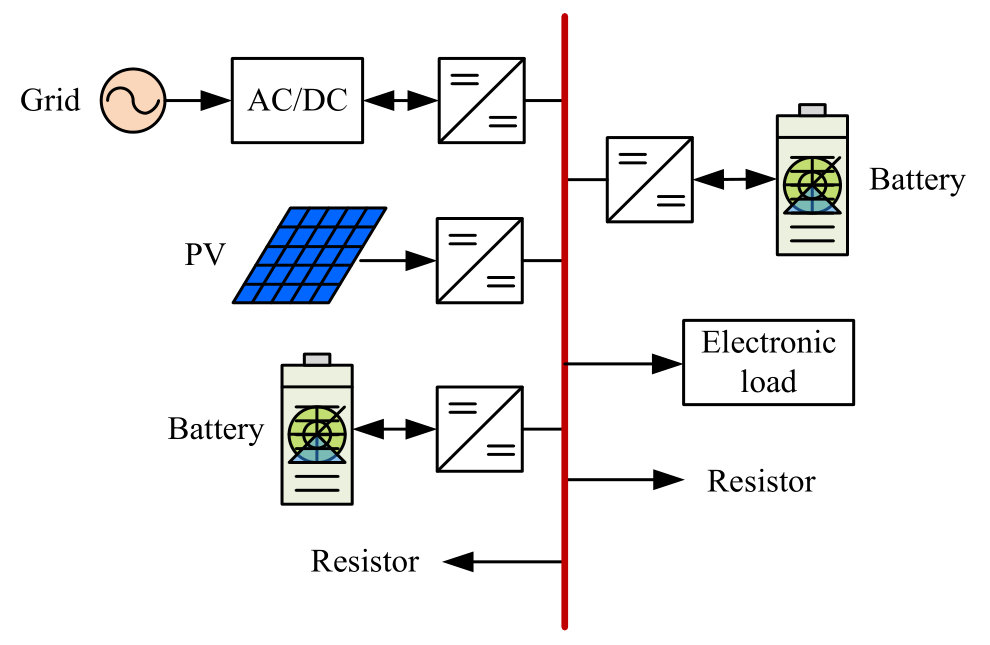
Each bidirectional interface converter is rated at 250 W, with a TMS320F28335 DSP control board, sensing and isolated gate drives for local regulation and coordination. The battery interfaces operate bidirectionally; the PV interface operates in the Boost direction.
The Completed Testbed
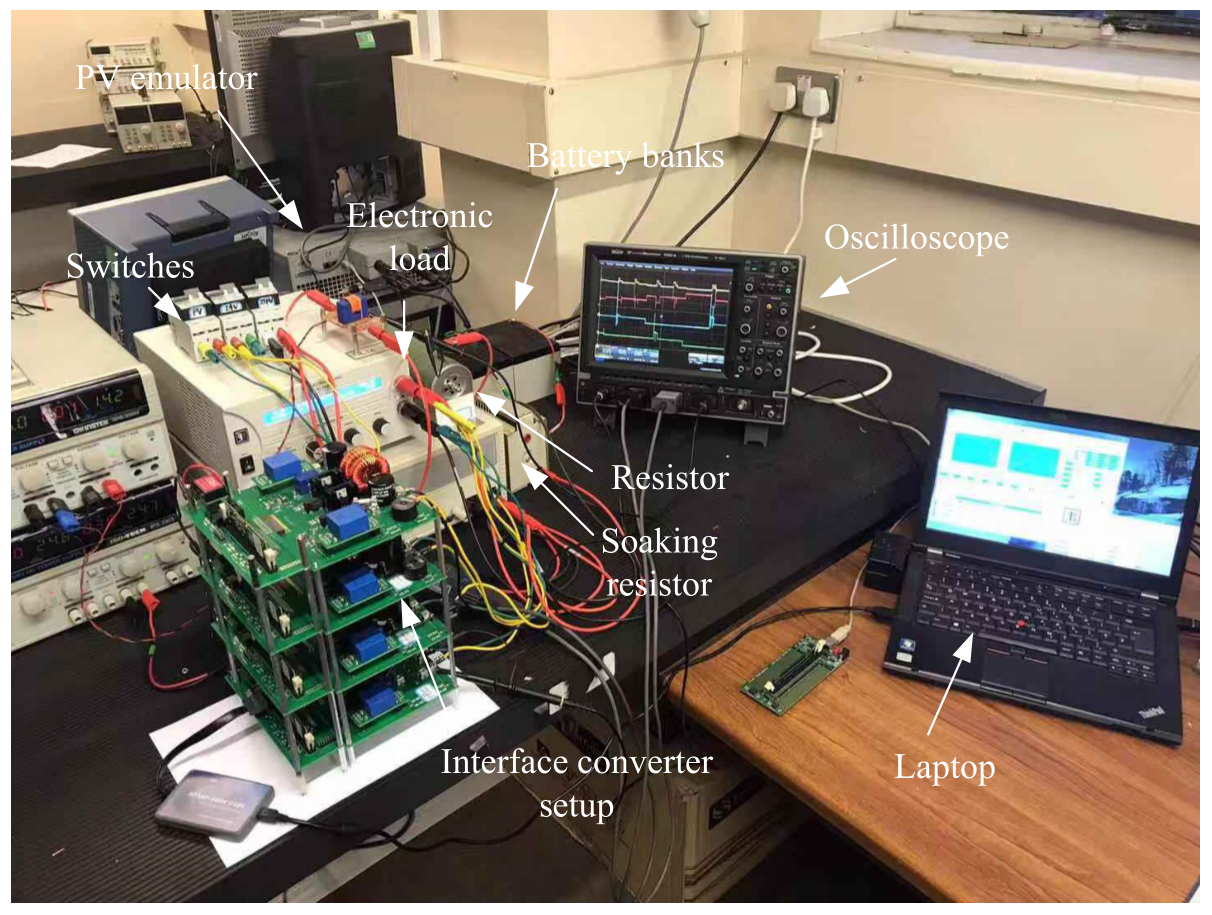
The testbed carried the experimental studies of the PhD research: passive control, dual-window DC bus signalling and rule-based energy management.
PhD thesis, Chapter 3 · All experimental platforms · Back to Research